


Balon kateterleri türleri nelerdir?
-
 2022-10-25
-
LEPU


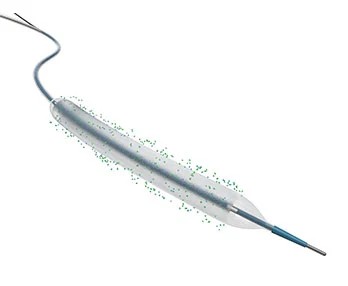
On January 16th, 1964, Dotter and Judkins performed the world's first lower limb vascular angioplasty on an elderly female patient using a balloon catheter. Thirteen years later, Gruentzig performed the world's first coronary angioplasty using a balloon catheter. Today, balloon dilation catheters are widely used for the diagnosis and treatment of cardiovascular diseases. Reviewing the development of balloon dilation catheter technology provides many insights for our current and future work. Next, let's take a look at the types of balloon catheters.
1. hızlı değişim balon kateter
The rapid exchange balloon dilation catheter is currently the most widely used type of balloon dilation catheter in percutaneous coronary intervention (PCI). The catheter has a side hole 25cm from the tip of the balloon, through which the guide wire is inserted and emerges from the side hole when it is inserted through the top of the balloon. This design greatly facilitates the operation of the operator and saves time. The structure of the rapid exchange balloon is also different from other types of balloons in that it includes a connection segment between the balloon and the push rod, occasionally leading to rupture. Both the balloon and guide wire are operated by one person, resulting in an ideal imaging effect. The disadvantage of this type of balloon catheter is that if the entire balloon system is not removed, the guide wire cannot be replaced. If an extension guide wire is not used, the OTW balloon cannot be replaced, and the push force is slightly reduced, and the tracking is slightly worse.
2. tel balon kateter üzerinde
The over-the-wire balloon dilation catheter (OTW) was first used in PTCA in 1982. It can be used for CTO lesions or when guide wire exchange is required, as well as for interventricular septal chemical ablation and central cavity pressure measurement and blood sampling. Currently, OTW balloons are rarely used clinically. The advantages of the OTW balloon dilation catheter include easy exchange of guide wires and good tracking. When the guide wire is difficult to pass through the occlusive lesion, the OTW balloon can provide additional support, similar to the role of a microcatheter. If the guide wire still cannot pass through the lesion, the OTW balloon dilation catheter can be used as a transmission catheter to exchange other guide wires. After the guide wire passes through the lesion, the OTW balloon dilation catheter can also be used for distal angiography to facilitate judging whether the guide wire is located in the true cavity. Therefore, the OTW balloon dilation catheter still has certain advantages in handling CTO lesions. The disadvantage of this type of balloon catheter is that the balloon size is slightly larger and the length of the steel wire is 300 cm, requiring cooperation between two operators.
3. sabit kılavuz tel balon kateter
Balon dilasyon kateteri, 2 cm uzunluğunda kateterin üst kısmında sabitlenmiş esnek bir plastik kılavuz tele sahiptir. Yaygın olarak kullanılan balon dilasyon kateterleri arasında, lezyonu geçme oranını artıran ve ideal bir görüntüleme etkisiyle sonuçlanan en küçük dış şekle sahiptir ve sadece bir kişinin çalışmasını gerektirir. Bununla birlikte, kateter hedef kan damarına girdiğinde, kateterin kırılmaya eğilimli olmasını sağlayarak, her iki yönde dönerken ileriye doğru itilmesi gerekir. Bağımsız olarak hareket edemez ve kılavuz telleri değiştiremez. Temelde artık klinik olarak kullanılmaz.
4. perfüzyon balon kateterleri türleri
Perfüzyon balon dilasyon kateteri, proksimal ve distal uçlarında birden fazla yan deliğe sahiptir, bu nedenle balon şişirildiğinde, kan akışı hala hastalıklı distal ucuna girebilir.
Ortalama aortik basınç 80 mmhg olduğunda, distal kan akışı hala 40-60 ml/dakika ulaşabilir. Koroner arter perforasyonu gibi komplikasyonları tedavi etmek için sürekli balon basıncı gerektiğinde, perfüzyon balon dilasyon kateterlerinin kullanımı belirli avantajlara sahiptir. Ana dezavantaj, kateterin nispeten kalın olması ve lezyonları geçme yeteneğinin zayıf olmasıdır.
5. özel balon kateterleri
Şu anda klinik uygulamada kullanılan özel balon türleri ağırlıklı olarak çift telli balonlar, kesme balonları, ilaç geçiren balonlar vb. içerir. esas olarak, bu üç tip balon hızlı değişim balonu dilatasyon kateterlerine aittir, ancak geleneksel hızlı değişim balonlarından farklı özel işlevlere sahiptir.
Çift telli balonun dış çapı normal bir balona benzer ve balonun sonunda tel şekline rehberlik etmek için bir iç lümen vardır. Ayrıca, balonun yüzeyinde, kılavuz telden balonun her iki tarafında 180 ° 'lik bir konumda bulunan sabit bir tel vardır.
Çift telli balon, plak dokusunu düzenli olarak kesebilir, endotelyumun minimum hasarı ile balonun değişmemesini sağlar. Kesme balonu, mikro kesme teknolojisini balon dilatasyonu ile birleştiren bir üründür. Şu anda klinik olarak kullanılan kesme balonları, daha iyi geçiş yapabilen üçüncü nesil ürünlerdir, daha düşük basınçla tam dilatasyon elde edebilir ve uzun vadede vasküler intimanın düzensiz yırtılma ve düşük yeniden daralma oranlarına sahip olabilir.
İlaçtan kurtulma balonu, geleneksel balon dilatasyon teknolojisini ilaçtan kurtulma teknolojisiyle birleştiren ve kademeli olarak üstünlüğünü stenting için etkili bir ek olarak gösteren bir üründür. İlaç yakalayan balon, metal stentler ve polimer taşıyıcılardan kaynaklanan yan etkilerden kaçınabilir ve yeniden daraltmayı kontrol etmek için hastalıklı kan damarı duvarının belirli bölgelerine ilaç uygulayabilir.